Gwen Fowler Real Estate, Inc.
https://www.coolmountainescapes.com/blog/understanding-commission-vs-concessions
Understanding Commission VS Concessions
Posted By: Gwen Fowler In:Date: Sun, Jan 4th 2026 10:25 am
Understanding Concessions and Commissions in Today’s Real Estate Contracts
Real estate contracts have changed, and with those changes come confusion for buyers and sellers. One of the most common questions we hear is how concessions and commissions are now handled. This article explains the current process in plain language so consumers understand what is happening and why it matters.
What Are Seller Concessions
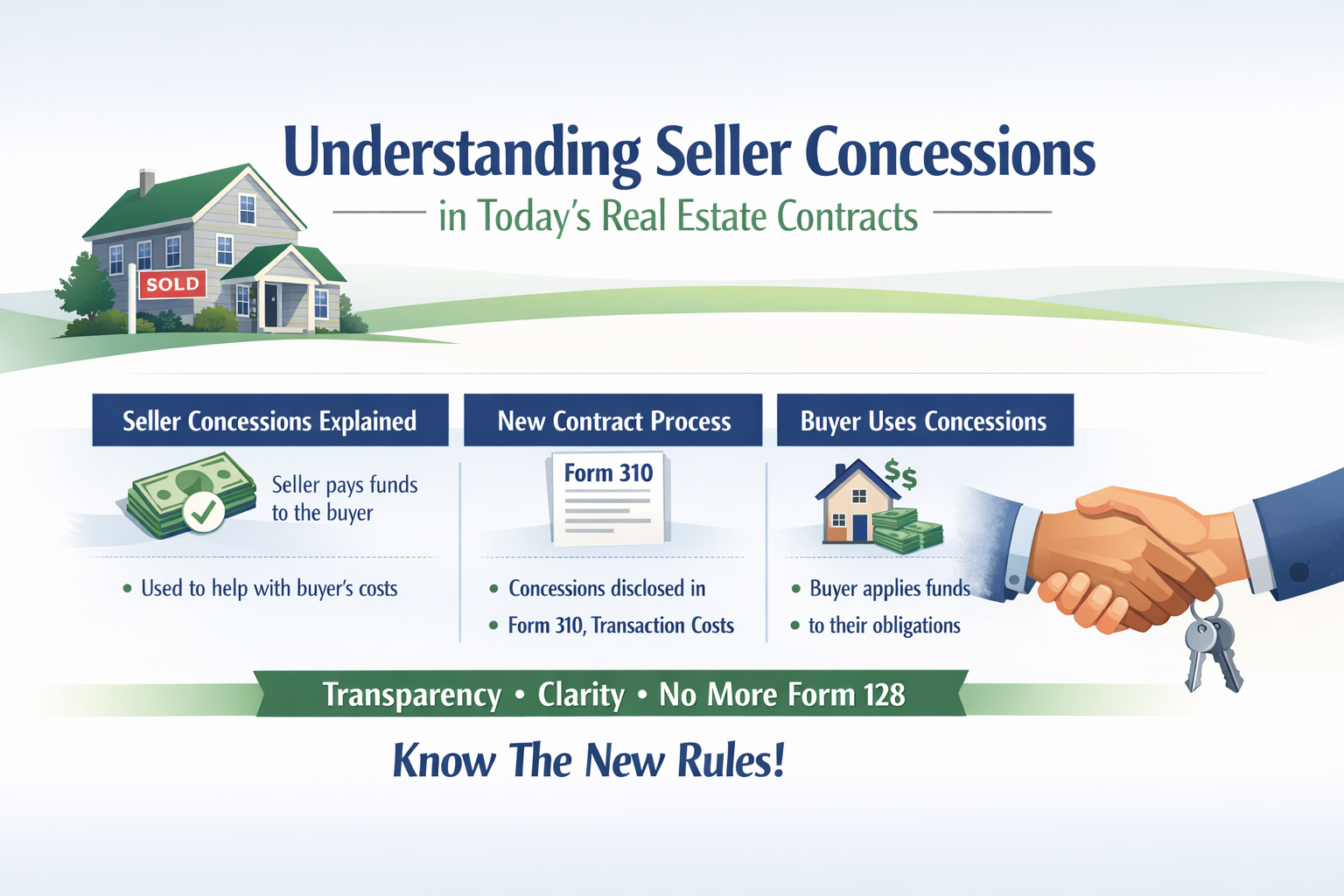
Seller concessions are funds the seller pays to the buyer as part of the contract. These funds are not for repairs or price reductions. Concessions are used to help the buyer cover their contractual obligations related to the transaction. In today’s contracts, seller concessions are shown clearly in Form 310, Transaction Costs, Paragraph 6, Section 4. This is the only place where concessions are disclosed and agreed upon.
Who Receives the Concessions
The seller pays Seller concessions to the buyer. The buyer then uses those funds to satisfy obligations under the contract and the buyer’s broker agreement. The seller is not paying vendors or agents directly. The seller pays the buyer, and the buyer applies those funds in accordance with their contractual obligations.
How This Differs From the Past
Traditionally, many sellers believed they were paying the buyer’s agent directly. That is no longer the case. Today, the seller signs a listing agreement that determines what they pay their own agent. The buyer signs a buyer-broker agreement that specifies the obligations of the buyer and the broker.
Concessions are a separate negotiation. A seller may agree to pay concessions to help the buyer complete the transaction, but the seller is not assuming the buyer’s contractual obligations. The seller agrees to provide funds to the buyer as part of the contract.
Why Form 128 Is Not Used
Our firm does not acknowledge or use Form 128. All concessions are negotiated in the contract itself and disclosed exclusively in Form 310, Transaction Costs. This ensures transparency, consistency, and clarity for all parties.
Why This Matters to Buyers and Sellers
For buyers, this structure provides clarity about what they are responsible for and how concessions can help offset those costs. For sellers, it gives a clear understanding of what they are agreeing to pay and how that payment is applied. Concessions are a negotiation tool. They can help make a deal work, but they must be decided upon when the contract is written. They are not automatic, and they are not required.
The Bottom Line
The way concessions and commissions are handled has changed, but the goal remains the same. To create clear agreements that allow buyers and sellers to complete a successful transaction.Understanding how concessions work today helps everyone move forward with confidence. If you have questions about concessions, commissions, or contract structure, we are always happy to explain your options before you sign.
Your next chapter starts here.