Gwen Fowler Real Estate, Inc.
https://www.coolmountainescapes.com/blog/build-a-cooler-home-in-south-carolina-with-smart-design
Build a Cooler Home in South Carolina with Smart Design
Posted By: Gwen Fowler In: How ToDate: Tue, Jul 7th 2026 9:39 am
Building a Cooler Home: Smart Design Choices That Beat the South Carolina Heat
When temperatures climb into the upper 90s and 100-degree range, many homeowners think the answer is simply a bigger air conditioner.
In reality, one of the best ways to keep a home comfortable begins long before the HVAC system is installed. Good home design can reduce summer heat gain, improve year-round comfort, and even help lower energy costs.
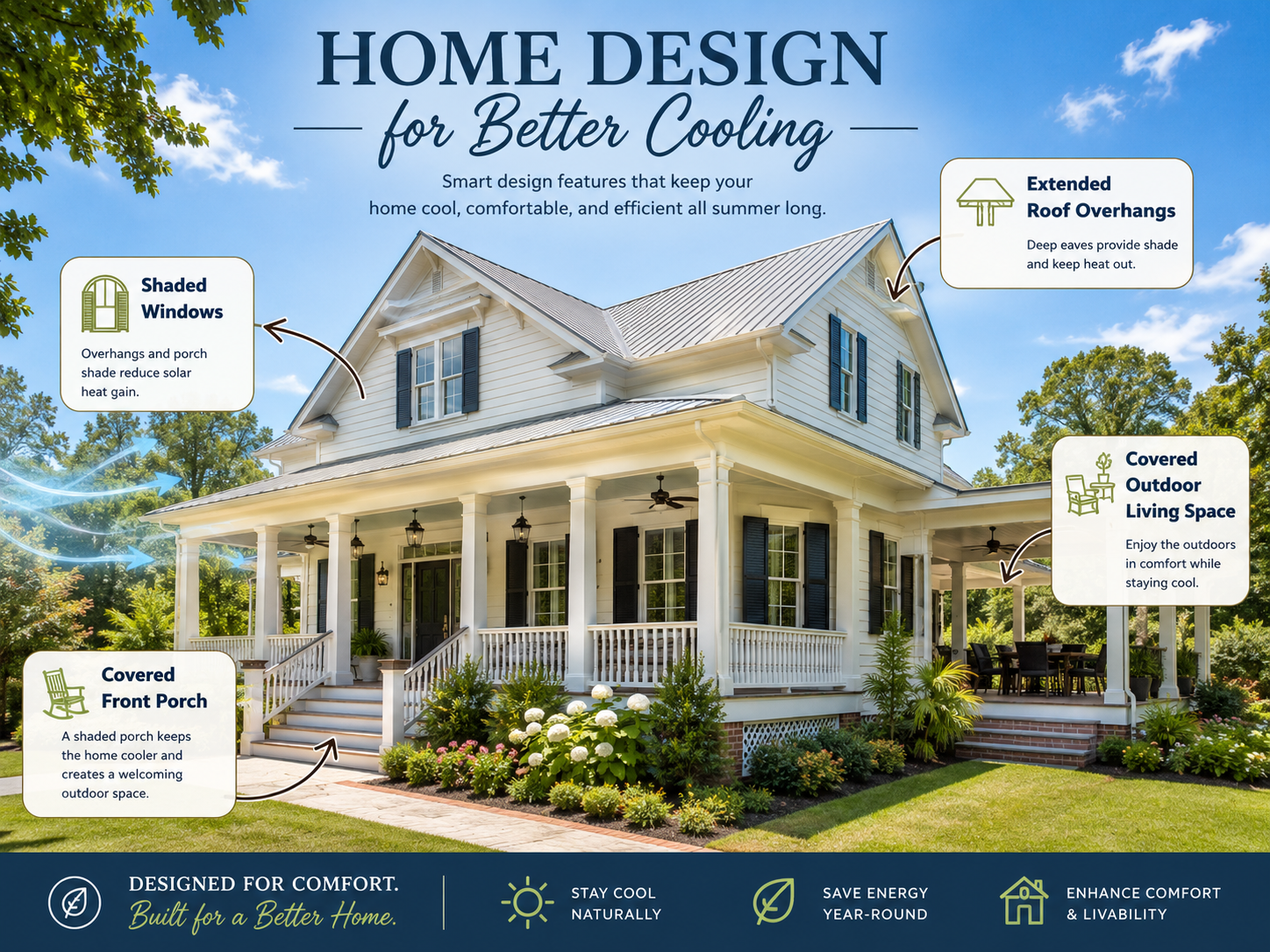
If you're planning to build a home in Upstate South Carolina, here are several features worth considering.
1. Extended Roof Overhangs
Roof overhangs do more than make a home look attractive. They provide shade for windows and exterior walls during the hottest part of the day.
Less direct sunlight means less heat entering the home, allowing the air conditioning system to work more efficiently. Properly designed overhangs can also help protect siding, windows, and doors from weather.
2. Covered Front and Back Porches
A porch is more than just a place to relax with a glass of sweet tea.
Strategically placed porches provide shade where it matters most. A covered porch on the west side of the home can block intense afternoon sun, while a deep rear porch creates a comfortable outdoor living space even during the hottest months.
Porches also reduce the amount of heat absorbed by exterior walls and windows.
3. Proper Roof Ventilation
A well-ventilated attic can make a remarkable difference in indoor comfort.
Ridge vents, soffit vents, and other properly designed ventilation systems allow hot air to escape instead of becoming trapped in the attic. A cooler attic means less heat transfers into the living space below.
Proper ventilation also helps extend the life of roofing materials and reduces moisture problems throughout the year.
4. Window Placement Matters
Where windows are located can be just as important as their size.
Limiting large west-facing windows helps reduce afternoon heat gain. North-facing windows generally receive softer light, while properly shaded south-facing windows can provide winter sunshine without excessive summer heat.
Adding energy-efficient windows with Low-E glass provides another layer of protection.
5. Light-Colored Roofing Materials
Dark roofs absorb more heat. Lighter-colored shingles or reflective roofing materials help reduce heat absorption and keep attic temperatures lower during South Carolina summers.
6. Shade Trees Are a Long-Term Investment
One mature shade tree can make a noticeable difference in comfort.
Trees planted on the west and southwest sides of a home help block the hottest afternoon sun while adding beauty and value to the property.
7. Build for All Four Seasons
Good design is not just about staying cool in July.
Extended overhangs, quality insulation, proper ventilation, efficient windows, and thoughtful orientation also help keep homes warmer during the winter months while reducing heating costs.
The Bottom Line
The most comfortable homes are not always the ones with the biggest HVAC systems. They are homes designed to work with the climate rather than fight it.
If you are building a home in Upstate South Carolina, think beyond floor plans and countertops. Features like extended roof overhangs, strategically placed porches, proper roof ventilation, quality insulation, and smart window placement can make your home more comfortable for decades while helping reduce energy costs.
Sometimes the smartest investment is not what you add after the house is built. It is what you design into the house from the very beginning.